Clinical Trials Search
ES/IODE clinical trials search helps explore protocols, recruitment status, interventions, diseases, and therapeutic areas. It is useful for tracking translational activity, identifying ongoing trials, and complementing literature search with a clinical view.
1 | |
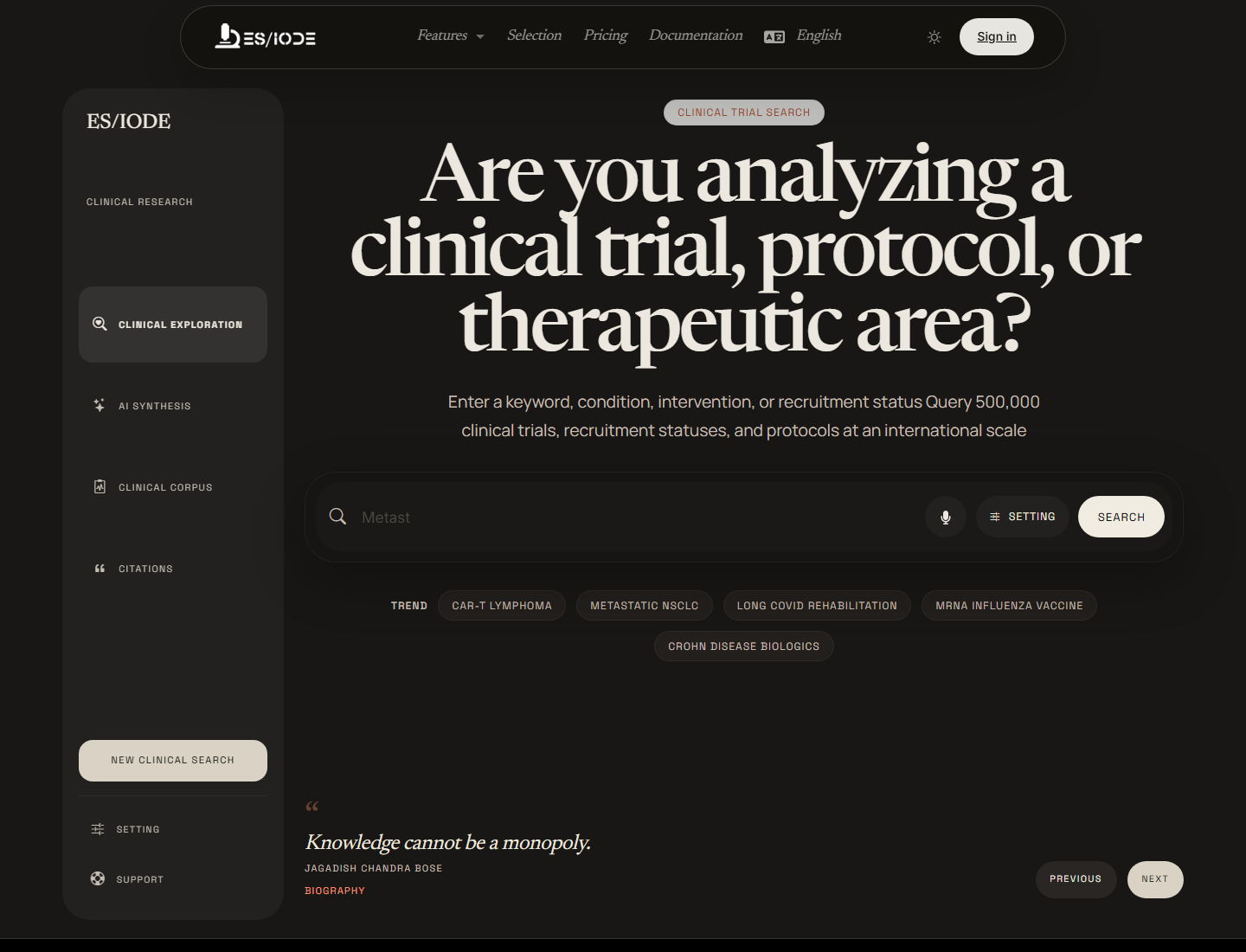
Build the search
Use terms related to the condition, intervention, population, biomarker, or mechanism. To broaden or narrow exploration, combine:
- disease name or clinical subtype;
- therapeutic class, molecule, device, or intervention;
- recruitment status or phase when available;
- target population, age, sex, or clinical context;
- biological criterion or endpoint of interest.
Interpret results
A clinical trial should be read through its protocol. Review status, phase, inclusion and exclusion criteria, intervention, comparator, endpoints, and location. An active trial does not mean that a treatment is validated; it means a clinical hypothesis is being evaluated.
Compare trials with available scientific publications to distinguish:
- preclinical hypothesis;
- ongoing protocol;
- interim results;
- peer-reviewed publication;
- clinical recommendation or authorized use.
AI assistant and context
When available, the AI assistant can help reformulate a search, explain protocol vocabulary, compare therapeutic approaches, or identify questions to verify in registries and primary publications.
Medical information
ES/IODE helps search scientific and clinical information. Results do not replace professional medical advice, an official protocol, or a regulatory recommendation.
Good practices
Record the consultation date, keywords, consulted registries or sources, and trial identifiers when available. For scientific synthesis, always connect trials with published articles, methodological criteria, and regulatory context.
Account and limits
Some options may be limited by the active offer, account sign-in, or public service quotas.